One of the perks of having prattled on about Nelson for a number of years is that, whenever a news story breaks regarding him, I get roughly 370 WhatsApp messages wondering whether I’ve seen it. There is never any danger of Nelson news flying under my radar.
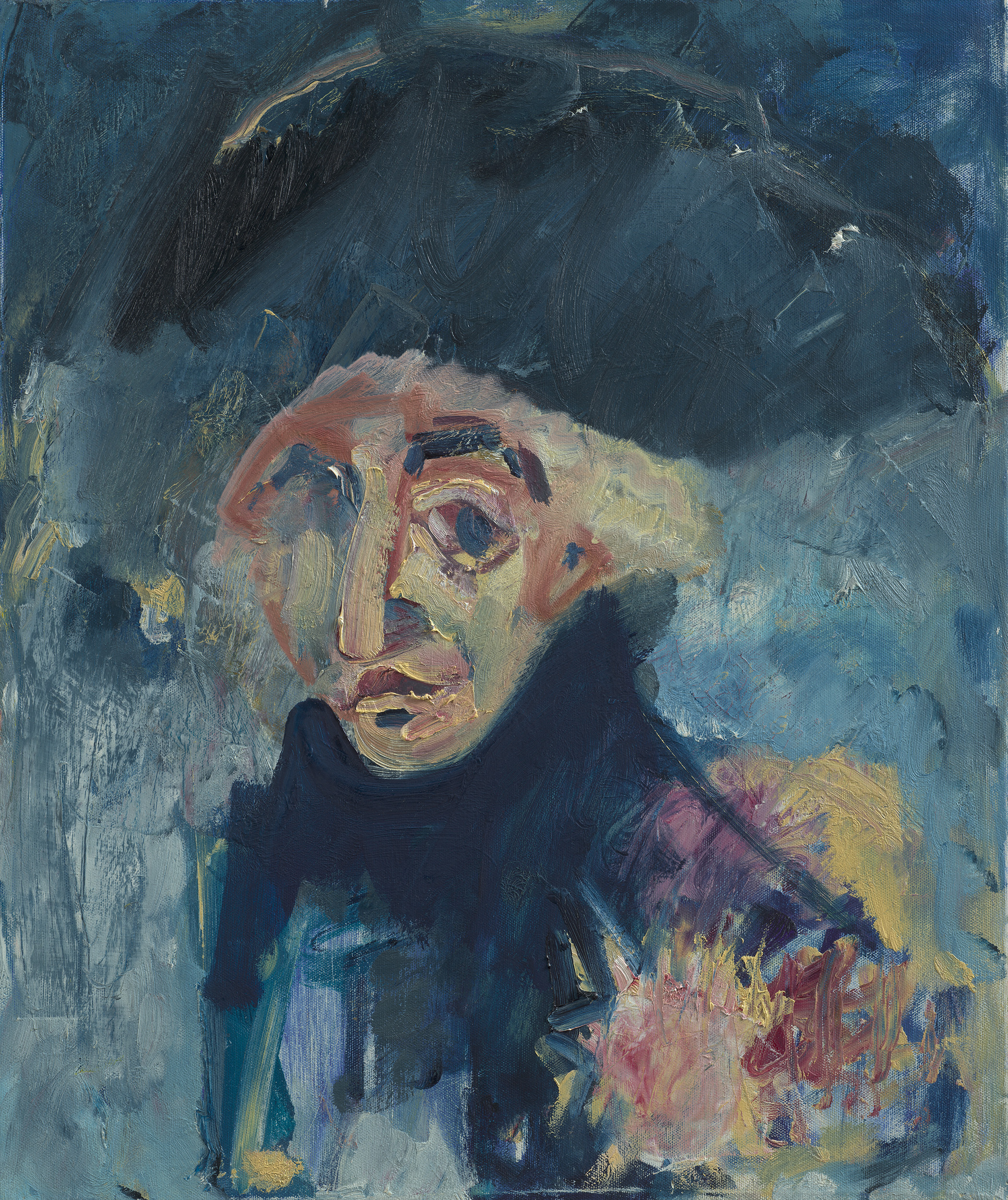
The most recent set of WhatsApp pings concerned the inclusion of his portrait in a new exhibition on ‘Queer Relationships’ at Liverpool’s Walker Art Gallery.
I gave the story the once over, but refused to give it the full attention it craved. Life’s too short. Everybody involved knows what they’re doing with this kind of thing: the newspapers get just as much pleasure from stoking the fire of outrage as those that deliberately light it.
What I hadn’t seen, until today, however, was some of the museum’s official statements about their decision to include Nelson in their exhibition. Although the comments are of little value to anyone or anything (seen in full here), they are perfectly indicative of a modern trend where reporting Nelson is concerned.
For a start, I don’t know if it is just my social media algorithms – and WhatsApp contact list – that favours Nelson content, but I am not sure any other historical figure has his or her actions so keenly brought to light. You don’t see half as much tittle-tattle regarding Isambard Kingdom Brunel or Attila the Hun. Nelson appears to be the go-to historical star, a man who anyone, and everyone, is free to mould, or posthumously libel, as they see fit.
If Nelson were gay, his story would be all the more fascinating. But he almost certainly wasn’t. The Walker Gallery have included Nelson’s portrait solely because he asked Hardy to kiss him as he lay dying: a moment packed with a homo-erotic tension that I must have missed. Hardy clearly missed it, too, seeing as he only kissed Nelson gently on the forehead.
‘No,’ the yearning Nelson doubtlessly thought, ‘kiss me properly, man.’
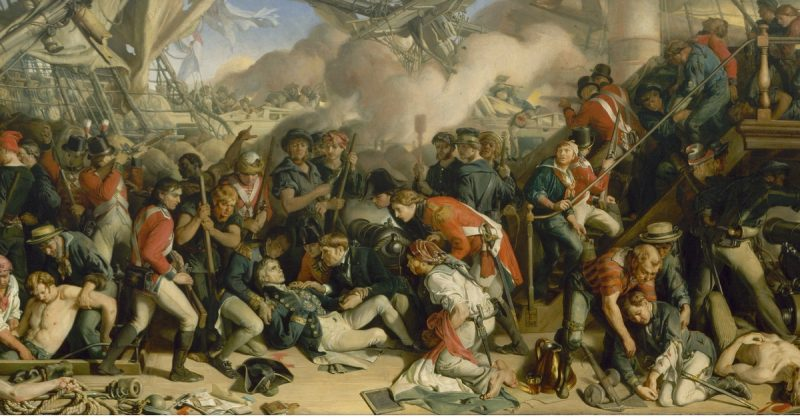
The gallery website then states that, ‘Whether or not their relationship was sexual remains unknown’.
That it remains unknown is, of course, inarguable, in much the same way that it remains unknown whether the Duke of Wellington dreamt of running a leisure centre. Or whether Queen Victoria devised a prototype for the Sega MegaDrive. Or whether Joseph Goebbels had a private penchant for cross-stitching pictures of naughty kittens. Such things are unknowable. But we can surmise their likelihood. Just as we can surmise the likelihood of Nelson and Hardy secretly fancying one another.
What is a good deal more knowable, is how effective it can be to purposefully toy with Nelson’s name in an attempt to drive eyes towards an endeavour that may otherwise be low on crowds. (Granted, I’m a Toffee Crisp-chomping philistine, but I hadn’t heard of the Walker Art Gallery until they started pondering the unknowable nature of a last-minute historical sexual relationship involving a shrivelled Vice Admiral whose left lung was at the point of collapse.)
As another writer has said on the matter, there are enough gay people in history, treated shamefully, who would benefit greatly from having their valuable stories brought to light. There is no need to fabricate a saucy death-bed flirtation between Nelson and Hardy.
The museum website’s most damning line was this:
‘Regardless of the truth, for many, Nelson’s famous request [for a kiss from Hardy] is symbolic of the sometimes hidden queer history of life at sea.’
Never in my life have I heard anyone say anything at all regarding how Hardy’s kiss to Nelson’s forehead symbolised hidden queer history. (And if indeed it does, then Nelson’s six-year affair with Emma Hamilton was one hell of a bluff.)
Nothing better demonstrates the contorted retelling of Nelson’s story than the above quote’s opening words:
Regardless of the truth.
The line was quoted in the Daily Telegraph but appears to have been removed from the museum website since. Its spirit lives on. Give it a week and there will be new WhatsApp messages wondering if I’ve seen the latest media broadside fired at Nelson’s corpse.
I will have done, sadly. About 370 times.
Nelson famously said he had ‘a right to be blind sometimes’; it appears the media enjoys a similar right, none more so than when he is their focus.
 Nelson The Sailor