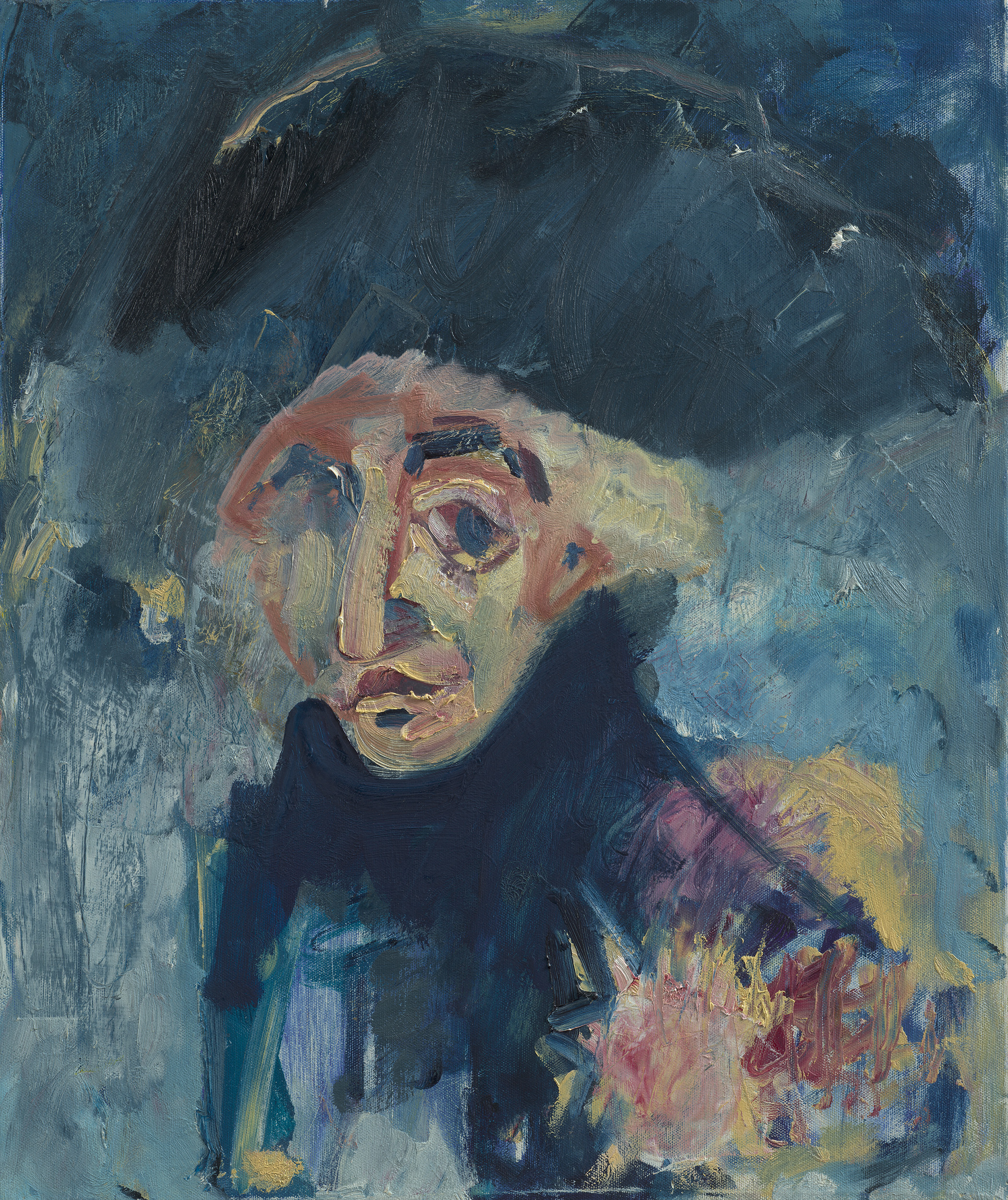
Horatio’s brief spell at school in Norwich (read more here) was followed by three years at Paston Free School in North Walsham, much closer to home. Opened the year Shakespeare wrote King Lear (1606), Paston had around a hundred boys on its roll when Nelson arrived in 1769.
Despite its inviting name, the Free School’s services came with a charge. Annual fees were around £21, about £3,200 today (although adjusting for inflation is always a fool’s errand). The newest addition to the site was an attractive three-storey building where Nelson had his lessons and boarded. This distinctly Georgian red-brick schoolhouse is still there today, serving as the main entrance for the otherwise thoroughly glossy and modern – and genuinely free – Paston College.
Just like today, where the college offers voguish courses in film, team leadership, and graphic communication, the Paston Free School of Nelson’s era may have felt similarly cutting edge. As mentioned in the last piece, it was common for Georgian schools to only focus on Latin, Greek, and their associated histories. Paston was one of the new establishments throwing a little Maths and Science into the equation. (Nelson was also taught French, but, maintaining an attitude that would see him through to his deathbed, he recalled not much care for the experience.)
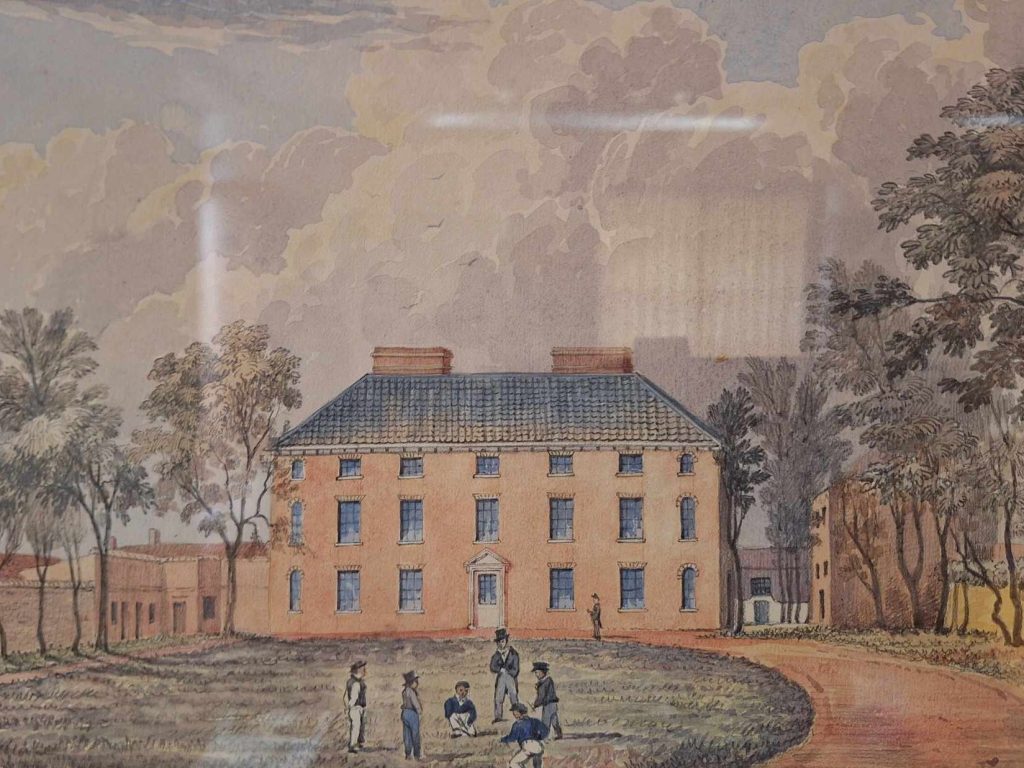
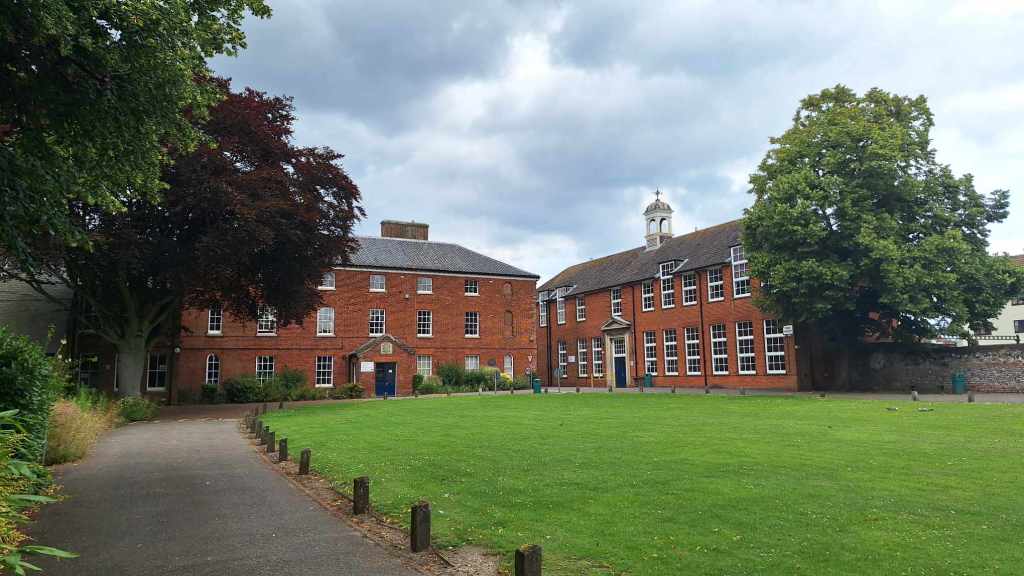
Aside from the building itself, almost nothing tangible survives of Nelson’s time at Paston, either physically or anecdotally. A nurse once recalled him catching measles and being holed up in a sickwing. Other than that, a line in a letter from a former schoolfriend offers the most tantalising, yet fleeting, image of the schoolboy Horatio Nelson:
‘Your station was against the wall,’ the friend wrote to the now-famous Nelson in 1802, ‘between the parlour door and the chimney.’
The chimney and parlour door are in situ today, in what has since been renamed the Nelson Room. Decorated with a surprisingly varied array of Nelson memorabilia, the room is now wood-panelled, with a big table plonked in the middle for important meetings involving Google Hangouts and branded lanyards. Despite this, it retains an atmosphere of centuries past.
For my money, the Nelson Room at Paston College is rivalled only by Burnham Thorpe as the must-see place for Nelson fans visiting Norfolk. There aren’t many buildings left, let alone rooms, in which one can confidently claim Nelson sat. But his presence in this room is undoubted. On my visit, the romantic in me couldn’t help but envisage him scribbling away at his desk against the wall, somewhere between the parlour door and chimney. (Sadly, the Nelson Room isn’t strictly open to the public. I only gained access in holiday season, courtesy of a kindly staff member who, fortunately for me, happened to share an interest in this era.)
Horatio seemingly left no mark as an academic, nor as a troublemaker. He may have left his mark elsewhere, though. For years, there was a rumour that he’d carved his name into a North Walsham church pew. This was superseded with the discovery on a playground wall – by the father of writer H. Rider Haggard, no less – of a brick into which the initials ‘HN’ had been scratched. The brick now sits in a case in the Nelson Room, daring you to believe its story.

It was while boarding at Paston that one of the legendary tales of the young Nelson was said to have occurred. Goaded on by the boys, so the tale goes, Nelson sneaked down from his dormitory window by moonlight, using a rope made of twisted bedsheets, in the hope of stealing pears from the schoolhouse fruit trees. The next morning, teachers offered a five guinea reward for informants. Not one of the children spoke up. When Horatio was finally collared, he is said to have confessed, ‘I only took them because every other boy was afraid’.
It is a nice story and not implausible, but is, frustratingly, just as hollow as those initials in the brick.
What isn’t up for debate is that his education would have been a hardy experience. Bullying was an accepted part of school life. The halls and dormitories of British schools were policed by senior boys, rather than teachers, and the boys’ methods of punishment were no less fulsome. Canings from staff were commonplace; the process was known colloquially as being ‘horsed’. Nelson’s headteacher at Paston was the incredibly Welsh Welshman, Rev John Price Jones, and was a known ‘flogger’. Such punishment was considered character forming. Certainly, the efficacy of it was seldom brought into question. Nelson himself would go on to use flogging as a deterrent on his ships.
On his termly journeys to and from Paston Free School, the young Horatio was said to regularly stop roughly halfway, in Holt, sleeping under the rafters on the top floor of a property belonging to his esteemed uncle, William Suckling. The building is today flanked either side by hairdressers and is a hub for Holt Town Council and Tourist Information. Victorians renamed it Nelson House on the off-chance that the story of the schoolboy Nelson staying there was true.

So hazy are Nelson’s early years that an almost certainly fabricated story about him going to a third school went unchallenged for years. The myth was started by the great George Manby (inventor of the first fire extinguisher, among other things), who claimed he went to school with Nelson in Downham Market and that the pair of them once floated paper boats down a little stream on the high street. No further evidence exists beyond Manby’s flighty recollections, but this hasn’t stopped Nelson subsequently appearing on the Downham Market town sign, nor having the local school named in his honour.
Hopefully these pieces on Nelson’s education have given you an idea of just how uneventful and unspectacular Nelson’s childhood was. I suspect that this silence is telling in and of itself: Horatio Nelson was just another boy. If he were spectacularly bright or spectacularly dim or spectacularly unpleasant, then his paths may be easier to track. His past is so labyrinthine in its ability to perplex, in fact, that it is wrong to even call him Horatio. As a child, he was known simply as Horace.
Horace the schoolboy. Your own interest in Nelson the man – or, indeed, Nelson the sailor – is likely the very reason why you’ve bothered to sit and thumb through this article on your smartphone. But here is the little boy instead. Horace. Land-locked in a musty North Walsham classroom, prey to the dull echo of a Welshman’s barked instructions regarding the five Latin declensions, whilst only occasionally daring to glance out of the window at a sea-blue sky.

